Third time’s the charm, it seems, at least as far as Stephen King is concerned. The first book of his I read was The Talisman, back in college. It didn’t really do it for me and I mainly finished it because, as previously mentioned, I’m a bit obsessive-compulsive when it gets to books. Earlier this year I read Firestarter. It was okay, but way too easy to put down. I was ready to give up on Mr King, when I came across the brand new reprint of his 1988 (when I was in the first grade) novel, The Eyes of the Dragon.
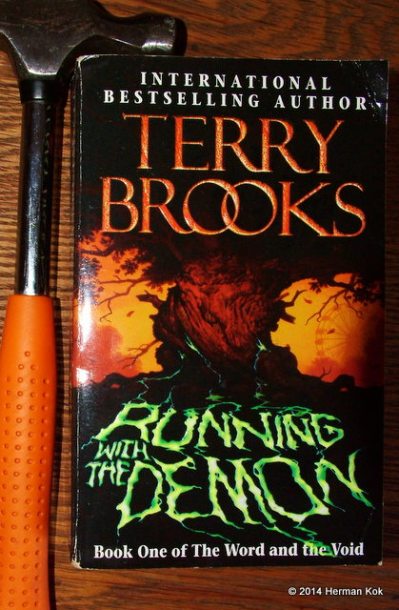
Running With The Demon by Terry Brooks is an urban fantasy/fantasy thriller and the first novel in his Word and Void trilogy. It is the ninth novel set in his Shannara universe, though chronologically it is the first, the events in it taking place more than two thousand years before The Sword of Shannara which was his first novel.
The novel, which takes place over the Fourth of July weekend, tells the story of Nest Freemark, a fourteen-year-old girl being raised by her grandparents in the fictional town of Hopewell, Illinois (there really is such a place as Hopewell, IL., but this Hopewell is actually based on the city of Sterling, IL., Brooks’s hometown). Nest has a secret: she has the gift of magic. Along with the sylvan, Pick, and her mysterious protector, Wraith, she has to help maintain the balance between good and evil in Sinnissippi Park, one of the places on Earth where magic still resides. Read the rest of the review here. No spoilers. I promise.
What if the Earth wasn’t the only one? What if there were millions more Earths beyond ours, formed every time in that history went one way or the other while moving along the trousers of time? What if ours was the only one where homo sapiens developed, leaving the others empty, unspoilt and there for the taking? What if all you needed to do to reach one was step to the side?
Parallel universes are nothing new to Science Fiction, but the idea is given a wonderful new spin in The Long Earth, a collaboration between Sir Terry Pratchett and Stephen Baxter.
(Please note: there are some minor spoilers to follow, but I won’t reveal any major plot points.)
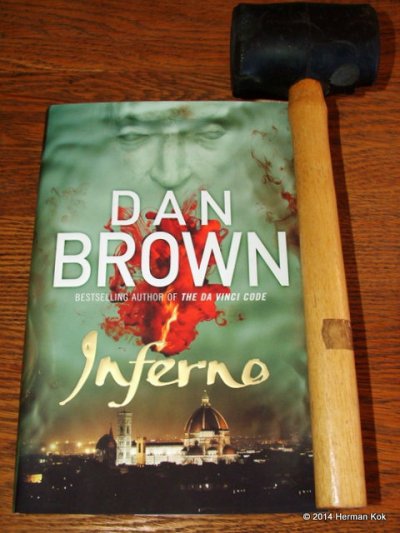
About a month ago I mentioned that I had won a copy of Dan Brown’s Inferno, which was a good thing as, after The Lost Symbol I wasn’t planning on buying one of his novels again. Turns out my instincts were right as Mr Brown’s latest offering was not much of an improvement on its predecessor.
I have to admit that wasn’t my first impression. In fact, I quite enjoyed the first two thirds of the novel.
(At this point it would be pertinent to insert a spoiler warning. I am going to reveal significantly more than the jacket blurb, but I’ll try not to ruin the big stuff just in case you really want to read it.) Continue reading “KokkieH Reviews Inferno by Dan Brown”→
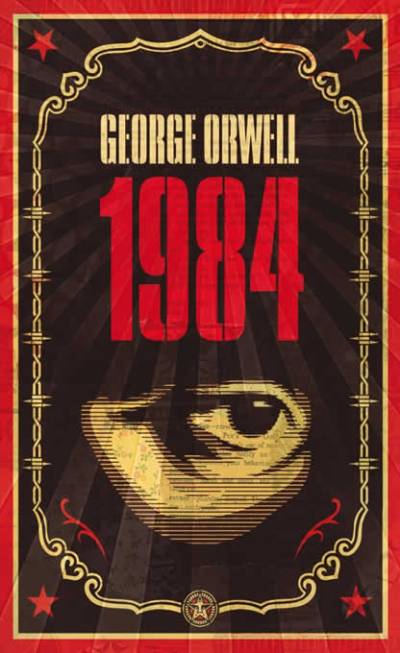
Just in case you’ve never heard of this book before (you barbarian), a few quick facts: Eric Arthur Blair, under the name of George Orwell, wrote it in the late 1940s. He died shortly after publishing it. He wrote a few other novels during his life, but none so famous as Animal Farm, which preceded Nineteen Eighty-Four and is about a bunch of farm animals who rebel against their master and start running the farm for themselves but is actually a satirical allegory of the rise of communism in post-revolutionary Russia.
Both Animal Farm and Nineteen Eighty-four carry the same message: they want to warn us of the danger of not thinking for ourselves and giving too much power to those who govern over us. According to Wikipedia these two books together have sold more copies than any two books by any other twentieth-century author.
Most people in the English-speaking world are forced at one time or another to read Animal Farm during high school (I can recite significant portions of Animal Farm from memory – occupational hazard of being an English teacher), which is a shame, really, as they end up hating what is really a delightful little novella. On the other hand, for some reason people think there’s something wrong with them if they have not yet read Nineteen Eighty-four, or at least, that’s the only conclusion I can draw from the fact that it’s the book most people have lied about having read.
If you haven’t read either of these, but are planning to still do so and don’t want me to spoil it, you might want to stop reading about here. If you’re not planning to read them, read on – at least next time you lie about having read it you’ll sound a bit more informed 😉


 if all else fails...use a hammer